
IVF is One of the Most Complex Things You Will Ever Be Asked to Support. Here is Why Your Training Did Not Prepare You For It.
A client emails you on a Monday morning. She has just had her Day 3 blood results back from her clinic and her FSH has come back higher than expected. Her AMH is lower than she hoped. The clinic has told her they want to move to a short protocol and start stimulation in three weeks. She wants to know what she should be taking, what she should be eating, whether her vitamin D level matters, whether the CoQ10 she read about online is the right form, and whether she should be worried.
You want to help her. You care about her. But if you trained as a nutritional therapist or functional medicine practitioner in the UK, the honest truth is that your core training probably gave you almost none of the tools you need to answer those questions with confidence.
That is not a criticism of you. It is a criticism of the gap that exists between what nutritional therapy training covers and what fertility clients, particularly IVF clients, actually need.
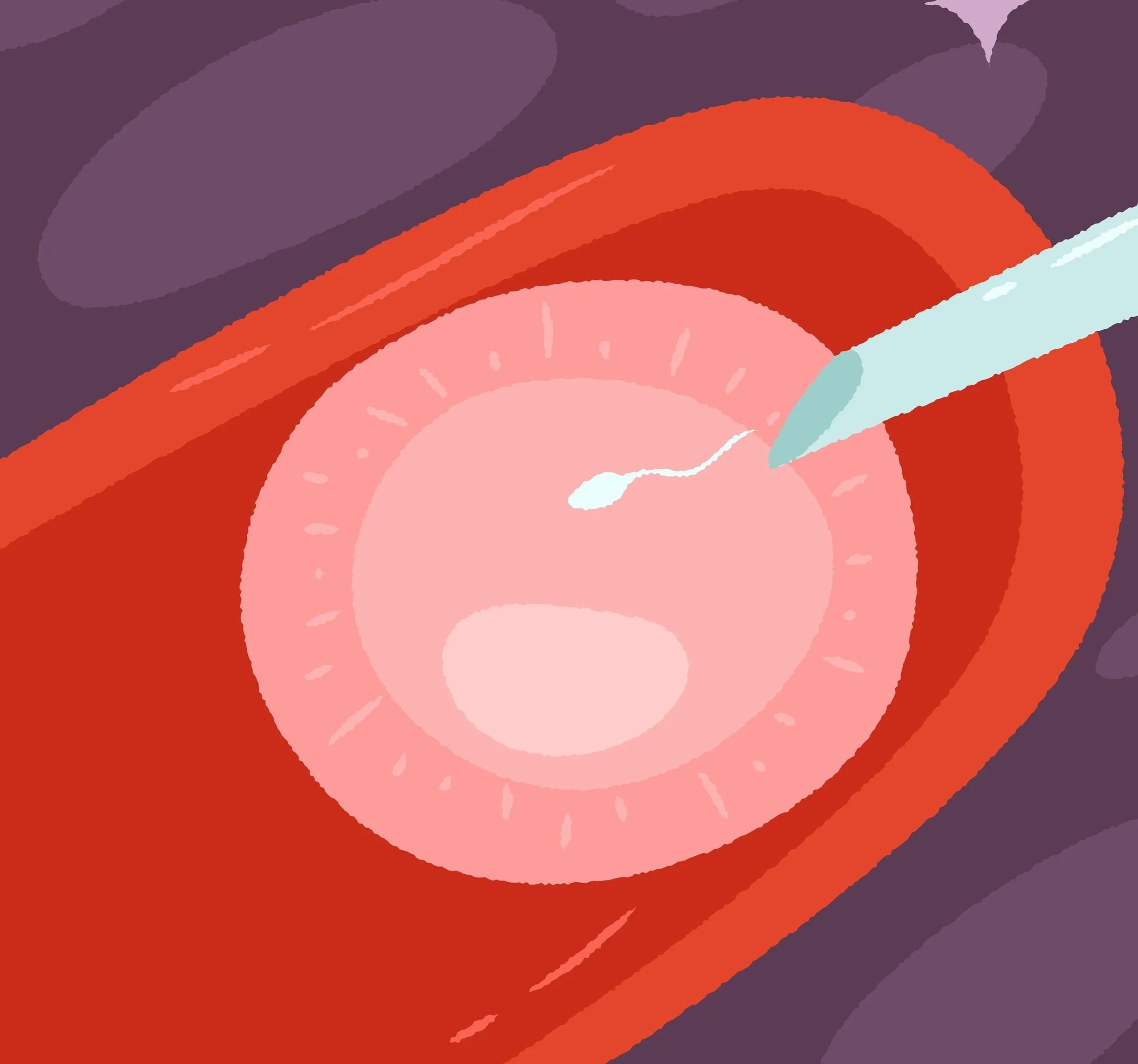
THE IVF WORLD HAS IT’S OWN LANGUAGE AND IT MOVES FAST
Before you can even begin to support an IVF client nutritionally, you need to understand what is happening to her body at each stage of the process. And IVF is not one thing. It is a sequence of distinct clinical phases, each with its own hormonal environment, its own nutritional demands, and its own risks. Downregulation. Stimulation. Trigger. Retrieval. Fertilisation. Embryo development. Transfer. The two-week wait. Each of these phases is physiologically distinct. What is appropriate nutritionally in stimulation is different to what is appropriate in the luteal support phase after transfer.
Then there are the protocols. Long protocol. Short protocol. Antagonist protocol. Natural FET. Medicated FET. Freeze-all cycles. ERA testing. EMMA and ALICE testing. PGT-A for chromosomal screening. Each clinic does things slightly differently. Each consultant has their own preferences and timings. Your client may be at a private clinic with daily monitoring, or she may be at an NHS unit where she is largely managing her own injections at home and only coming in every few days.
If you have not spent time learning this landscape in depth, you are navigating in the dark alongside her. And she deserves better than that.
The questions your clients are asking that your training did not cover
Here is what IVF clients actually ask their nutritionist. Not in theory. In practice, in a consultation, often tearfully, often on a tight timeline.
Should I be doing anything differently during stimulation to support follicle development? Can I continue with my supplement protocol during IVF or do I need to pause anything before egg retrieval? My clinic has put me on a trigger shot at 11pm tonight. Does that change anything? My embryos did not fertilise well. Is there anything I can do nutritionally before the next cycle? I had OHSS last time. What can I do this time to reduce the risk? My lining is not thickening on oestradiol. My consultant says they might cancel the transfer. Is there anything that might help? I have two good quality blastocysts but my previous transfers failed. Could my vaginal microbiome be a factor?
These are not unusual questions. They are the questions every IVF nutritionist gets asked regularly. They require a depth of knowledge that encompasses ovarian physiology, embryology basics, endometrial receptivity, the pharmacology of the medications being used, the interpretation of blood and ultrasound monitoring, and the evidence base for specific nutritional and supplement interventions at each phase.
None of that is in the standard curriculum.
The specific areas where the knowledge gap is sharpest
Stimulation phase nutrition. Knowing how to support follicular development during ovarian stimulation requires understanding how FSH drives granulosa cell activity, what role mitochondrial energy production plays in oocyte quality, and which antioxidants have evidence behind them at this stage. CoQ10 in its ubiquinol form, the dosing, the timing, and why it matters is not covered in most training programmes. Neither is the role of DHEA in poor responders, or the specific dietary approach that supports a healthy follicular fluid environment.
OHSS prevention. Ovarian hyperstimulation syndrome is a genuine clinical risk in IVF, particularly in clients with PCOS or high AMH. There is a meaningful nutritional role in OHSS prevention and recovery, covering electrolyte management, protein intake, and specific foods that support vascular stability. Most practitioners have no framework for this whatsoever.
Egg and embryo quality. Clients want to know what they can do to improve their eggs before retrieval. The evidence base here is actually good and growing. But it requires understanding the 90-day follicular development timeline, the specific role of oxidative stress in chromosomal abnormalities, and how to differentiate between the supplements with genuine evidence and the ones that are simply popular on fertility forums.
The FET cycle. A frozen embryo transfer cycle is not just a simpler version of a fresh transfer. It has its own endocrine dynamics, its own nutritional priorities, and its own risks. Endometrial receptivity is influenced by specific nutritional factors. The vaginal and uterine microbiome matters enormously for implantation and most practitioners have never been trained to work with this at all.
Male factor. In roughly half of IVF cases, there is a significant male factor contribution. DNA fragmentation, sperm morphology, oxidative stress in the seminal plasma, the semen microbiome. A comprehensive IVF nutritional approach addresses both partners, which requires a whole additional body of knowledge.
Clinic liaison. Knowing when and how to communicate with an IVF clinic on behalf of your client, what questions to ask, what information to request, and how to position yourself as a clinical collaborator rather than an alternative practitioner is a skill in itself. Most practitioners have no idea how to navigate this relationship.
Why this matters more than in almost any other area of practice
In most areas of nutritional therapy, if you are working at the edge of your competence, the consequences are manageable. You refer. You wait. You reassess.
In IVF, there is no waiting. A client going through a cycle is on a strict clinical timeline. Retrieval is on a specific day. Transfer is scheduled. Decisions about supplements, diet, and lifestyle need to be made accurately and quickly. The emotional stakes could not be higher. A cycle can cost anywhere from three thousand to eight thousand pounds. For many clients it represents years of saving and months of emotional preparation.
The pressure to give a confident, accurate, helpful answer is intense. And the gap between what you know and what you need to know is at its most costly here.
You should not have to figure this out alone
The good news is that you do not have to. The knowledge exists. The evidence base is substantial and growing. There are practitioners working in this field who have spent years developing the clinical frameworks that make IVF support genuinely effective rather than well-intentioned guesswork.
What has been missing is a structured, clinical, practitioner-focused way to access that knowledge. Until now.
Where to go from here
If IVF support is something your clients need from you, there are two places to start.
The first is the AH Fertility Academy. The Academy is a ten-month practitioner mentoring programme that covers the full spectrum of fertility nutrition in genuine clinical depth, including IVF preparation and support, FET cycles, embryo quality, male factor, and clinic liaison. It is designed for practitioners who want to work in this field with real confidence, built around real case experience and direct mentoring from Angela Heap, who has 18 years of specialist fertility nutrition practice. The next cohort begins October 2026. Applications are open here.
The second is the IVF Nutrition and Adjunctive Treatments Short Course, a standalone deep-dive module covering everything you need to support clients through an IVF cycle from first consultation through to transfer. It is available to any qualified practitioner without commitment to the full Academy programme, and you can start it immediately. It covers the phases of IVF, stimulation phase nutrition, OHSS prevention, egg and embryo quality, the FET cycle, male factor support, the microbiome, and how to work alongside an IVF clinic professionally. Details and enrolment here.
Your clients are going through one of the most demanding experiences of their lives. They deserve a practitioner who genuinely knows how to support them through it.
This post was written for qualified nutritional therapists and functional medicine practitioners. The AH Fertility Academy offers practitioner mentoring and short courses in specialist fertility nutrition.